
Wading in the deep end of the bath
This did not go as expected.
I assumed Lithium Bath was a music project.
I was wrong.
Turns out, Lithium Bath is a friendship; a coming-of-age story; an increasingly entangled shared life.
When I started asking Ransom questions about the band, he responded by telling me how spending Summers with Zach shapes your character, and may increase your BAC.
An hour into our conversation, something became clear:
Every song they write, every recording they release, every piece of merch they print—everything is an expression of their bond. Each is a discrete depiction of one observing the other observing their shared experience, wrestling it, analyzing it, admiring it, projecting it onto strings and skins, then capturing the sound it makes.
Meet at the duplex
Tyler Miller: I want to get the tape in front of me. I don't have any questions prepared.
Ransom Jarvis: That’s okay.
TM: We’re just winging it. But the intent is to learn about Lithium Bath in general, and you and Zach as the two parts of the band, and then the self titled. So kind of start broad and then zoom in on the LP.
RJ: Sound good. [Rummaging around the duplex searching for something.] I’m trying to find my copy of the demo just to have handy.
Ransom and Zach meet
“There used to be a Starbucks over by Broadway Square Mall—and there was a wall next to that.”
TM: You are Ransom Jarvis.
RJ: Yes.
TM: And you are fifty percent of Lithium Bath. Arguably some other percent given you're doing vocals and you're doing the stringed instrument. And then your other half or so is Zach Hart. Where's he right now?
RJ: He is in Alaska right now, which is where he does his seasonal work six months out of the year. And then Arkansas for the other six months.
TM: Crazy. And we're in Texas. That's about as far apart as you can be in the continental U.S. So we won't be able to get Zach’s input, but hopefully you can represent the band well enough. Talk about the origin of Lithium Bath. Like, how do you and Zach know each other? And when did you discover that you had musical chemistry?
RJ: Zach and I became friends—it was around my junior year of high school. There used to be a Starbucks over by Broadway Square Mall—and there was a wall next to that where all the emo kids and punks and a lot of people who were probably older than we should have been hanging out with at the time would all just sit around and, you know, be teenagers and early 20-year-olds and whatnot. Doing a whole lot of nothing. Zach was on a skateboard and came up to me, went to dap me up and was like “Sup?” Because a mutual of ours was introducing us. And I was like, "Oh, you must be Zach—I’ve heard so much about you." I was like, "You're so cool dude." He thought I was being fake to him. Like I was just trying to suck up. We saw each other at mutual functions and at people's houses. Then one time we finally got to talk one-on-one and we hit it off really well. We started talking about music and just—I don't know what band came first or what movie came first—but the ball got rolling.
TM: At a party. I feel like that's a common thing.
RJ: Yeah. It wasn't even like a party-party. It was Zach and some of his friends hanging out at their apartment, just having some folks over to like watch a show or get food or something. And I happened to tag along. Everyone else ended up leaving to go to do something and I got stuck there with Zach.
TM: Very romantic.
RJ: Right? We started going band-for-band with niche nerdy music and whatnot, and that’s how our friendship began. We started hanging more and more often.
TM: Was he a drummer at the time?
RJ: He was not at the time. His last time drumming was in his church band when he was a kiddo. When we met, he had a midi keyboard and he did a lot of Homeshake-style music. Indie solo stuff, kind of dream-poppy.
TM: So Zach’s a songwriter himself?
RJ: Yes.
TM: I didn't know Zach wrote songs too.
RJ: Zach has always been a better songwriter than me, in my opinion. I have a lot that I've learned from him whether he'll admit to that or not. I think he blows me out of the water.
Growing up together
“He brought a six’er of PBR.”
RJ: We both went through a lot of growing up experiences together, trying to figure things out. You know, he's a few years older than me. So I was watching him figuring out his transition into young adulthood. And I was taking notes and thinking, “Oh, this guy's probably going to be around when I go through these things, so I'm going to be here for him too right now. And we'll get to learn from each other and I'll be able to be here for him as a friend through this and then whatever I'm going through I'm sure he'll be around for me too.” We went through our own hardships and always had each other's backs. I remember one of the first times where I felt almost a family connection to him was when I had just gone through a breakup in my first year of college. It was late-2019, very early COVID and I had to move out of my dorm to live at my parents again. Zach brought over a six’er of PBR. I had never had PBR in my life.
TM: Wait, how old were you at that time?
RJ: I’m admitting to drinking underage.
TM: I'm not trying to incriminate you, I swear, just trying to get the timeline. That gives it context. You're on the cusp of entering the next season of life, and for him to share a beer with you—you know what I mean? I just find that endearing.
RJ: Oh yeah, he definitely passed me the torch of being a dude in my mid-20s.
TM: A six-pack of PBR is some kind of metaphor for that.
RJ: Yeah we established the covenant. It was my first communion.
TM: There you go.
RJ: We had a six-pack of PBR and we watched Barton Fink. We call them walking simulator movies. It’s usually an isolated lonely male figure with clear mental difficulties going on and it's just about his spiral. We both watched a ton of movies like that back then. We’ve branched out since. We realized there's more under the sun.
TM: You are what you watch.
RJ: Right, let’s not perpetuate it. So that was a really cool moment in our friendship.
TM: And no music yet, you guys weren't in a band, Lithium Bath doesn’t exist?
RJ: Not yet. We had talked about the potential of doing music some time, we had jammed here and there, but everything started band-wise in 2020.
Lithium Bath records their first demo
“The karaoke box, basically.”
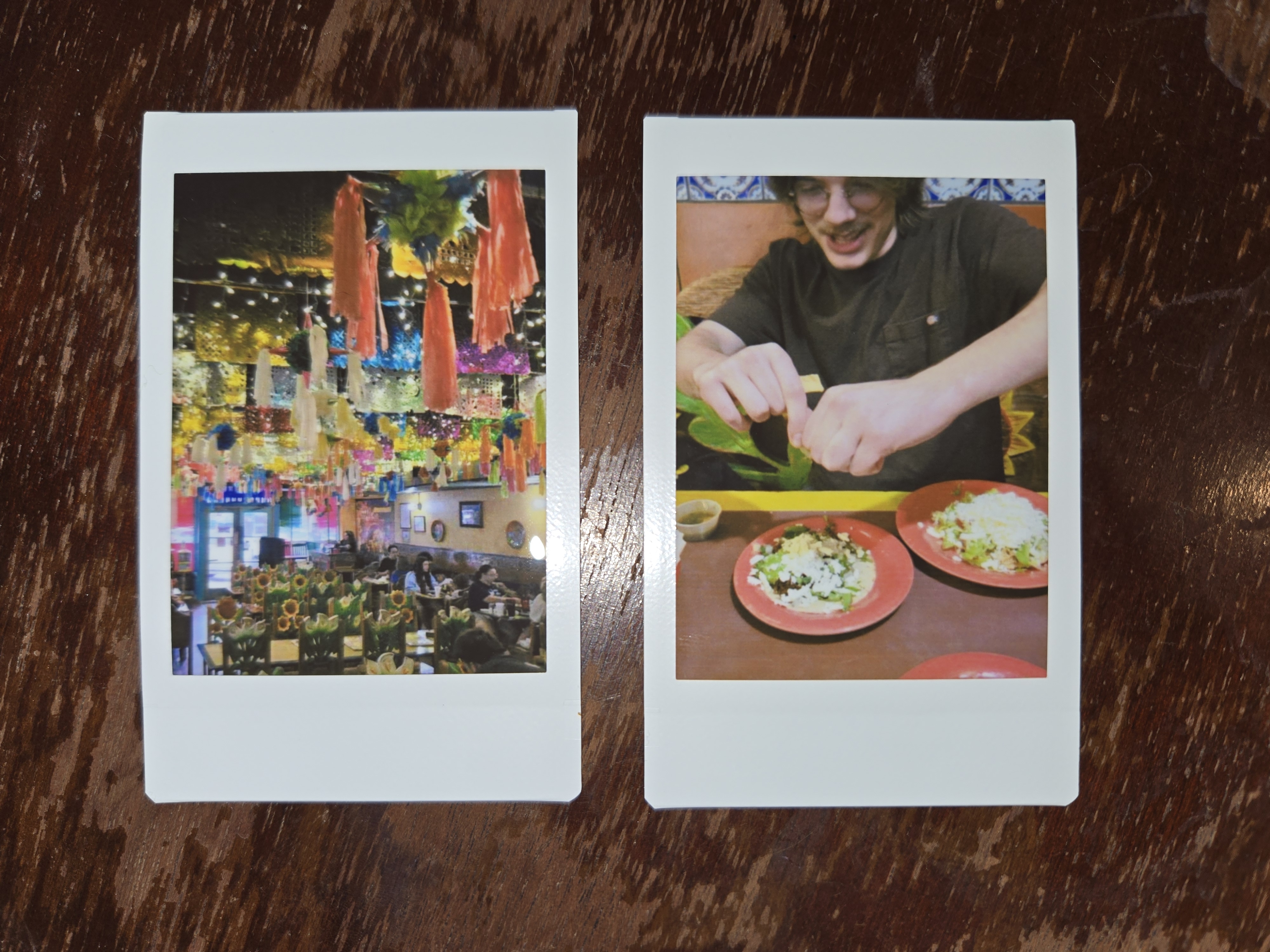
RJ: I had just moved into that apartment I was showing you downtown above the Mexican restaurant and that was my first time living outside of my parents and not in a dorm. Like, “Okay, I'm responsible for myself now.” And Zach was like, “Dude, this is a perfect apartment to do music in.” I talked to my roommate and asked if we could do band practice there, like, “Would you mind?” He was like, “Do what you want, you live here too.”
TM: Good roommate.
RJ: Yeah! Me and Zach spent the next couple months pooling all the money that we had—which was not a lot—and we bought a three- or four-hundred-dollar drum kit from Guitar Center. Just something rudimentary. We set it up, got the ball rolling, and were going within a couple weeks. I remember the setup: I had my jazz chorus amp, a couple pedals, he had his drums set up in the other corner, in between us on top of a folding chair was a little Fender Rumble amp—it was probably 15 watts or something—and we were running a microphone into that.
TM: Definitely not what it was designed for.
RJ: The karaoke box, basically. And on the floor between all three of those things we put a tape recorder, blank tape in and hit record. No mixing—there was nothing we could mix. The demo had this variable…like…the recording level would drop…
TM: The tape was compressing it?
RJ: Yeah, yeah, and so the drums had this almost boom-bap-y sound, and we both loved it and agreed to keep emulating that throughout the rest of our music journey. I wrote a note—let’s see. Oh yeah, Zach’s also the reason I own a Grand Marquis—he owned one at the time. I remember we were driving to Guitar Center to buy the drum set in his Grand Marquis. I'd never been in a car that big, there was no AC, and it was hot as shit outside, and we were listening to…[noisy motorcycle drove by]…The Kodan Armada. I think it was either them or I would set myself on fire for you. Some early-2000s screamo that we both were obsessed with at the time. And I wrote:
Riding in the Grand Marquis
It is overcast.
Traffic sucks but we're not pressed for time.
We had finally saved enough,
Scourging payroll and saving tips all summer long.
It's time to buy the drum kit.
A simple Ludwig.
It's been too many years.
At this point anything will do the trick.
Starting the sequence.
Lithium Bath comes to fruition today.
TM: Hmm.
RJ: We recorded our first demo in December, so yeah, we took three or four months to learn our instruments then recorded it. I don't know, we were both super giddy. And even today, there'll be a certain weather outside, or enough trivialities in our personal life to make us kind of angsty again, and we’ll text each other, “Hey man, it's bath time.” Like, “We’ve got to start writing again.” This is where it comes from.
Recording process
I'm very dorky, but that's not where my dork-brain goes.
TM: Obviously the band has developed since those initial demos. How would you describe your evolution?
RJ: Everything that appears on the new LP is not new material to either of us. They’re songs that we wrote prior. A few of them I wrote when I was 16 or 17 before I had even met Zach. I had no intention of ever doing anything with them. But pretty early in our band history I was like, “Here's a couple songs I wrote.”
TM: Did they sound like the songs on here [points to s/t tape] even when they were in their early form?
RJ: A few of them. Gentle Living definitely sounds about identical to how we intended it. Dasein (reference) is another one, and I wouldn't say it sounds the same as it was when we were first practicing it, but the LP-version sounds the way we had both envisioned it sounding back then, but weren't either technically able to do yet, or didn't know how to capture, I guess. Any of the songs written in 2020 (including Laminar which appears on this demo [points to demo lathe] as well as on the LP)—they’re basically the same, it's just we've learned what our cohesion looks like. If you could sniff out the way that we work together as musicians on the demo, that same energy is pungent on the LP. I guess we really found the way we mesh and played into it completely.
TM: When you wrote these as a teenager, was it just you and a guitar and the lyrics? Did you always imagine it would have drums that sounded like that?
RJ: I hoped for it but I remember the question I was asking at the time was, “How am I going to learn how to program drums and do something that's not just something I could sequence?” Like, Zach’s drumming has a lot of fills and we also change time signature and tempo so much. It's nothing that you—I mean, you could probably do it on a sequencer.
TM: It would not be fun.
RJ: I'm very dorky, but that's not where my dork-brain goes. Laminar is a perfect example. That one we wrote together. I remember we were listening to Lounge by Modest Mouse and halfway through the song it basically stops and whenever the guitars and drums come in after that, it's very slow—very different vibe the rest of the song had—and it just kind of cascades and gets chaotic. Me and Zach were like, “Hey like let's write a song that does that.”
TM: And you did.
[Both laugh]
RJ: I even ripped off hitting the harmonic, then bending. We make our inspiration pretty clear and we're pretty unabashed about them.
TM: Dramamine was the drive-to-school-at-six-in-the-morning song my sophomore year, so yeah, I love those meandering instrumental sections that show up in y’all's stuff.
RJ: To cover some of the technical differences between the LP and our prior recordings: over the years of doing music with Zach, we've had the chance to use some very different recording processes as a band. The demo and Everything Before You Left—which was everything Zach and I had recorded on phone or tape or whatever before he moved from Texas back to Arkansas. That album was more of just a compilation of tracks. There are a few songs on there where you can hear us having done multi-tracking for the first time and we were so bad at it. It's funny. We started incorporating noise elements and doing a lot more experimental stuff which we absolutely stuck with for the rest of our career. After that was the EP, Evensong. That breathed new life into the band. Not that we had any intention of ever calling it quits, but neither of us expected to go and make that EP. We made it in one sitting, in one night.
TM: That’s nuts.
RJ: Yeah. Basically, Zach was living in Arkansas, I was in school full-time and working two jobs, and we were both just kind of fed up with life. So I was like “Zach, I'm going to book an Airbnb in Arkansas, I’m going to bring my Fostex four-track cassette recorder, one tape, my Casio SK1, and my acoustic." Zach brought his acoustic and a tambourine. We didn't even bring any microphones just because the Fostex has—I’ve got it somewhere over there [looking around the Duplex]—it's got a little built-in mic. But the mic is right in front of the cassette's motor.
TM: So you hear the noise?
RJ: Yeah, you hear like [makes whirring sound] the whole album. We sat down, and we recorded five songs. One of them was one of Zach's GarageBand projects that we just reversed and did vocals over.
TM: Nice.
RJ: All the vocals were either poems that one of us had written that we found in our Notes app or came up with on the spot. We put a sample of Angela Davis on it too, because we were both really into her at the time—I mean, she's GOAT’ed. It was just a quote about world liberation basically. We went in not expecting to make anything and putting some of our half-baked ideas down and being like, “Okay let's just sit with this until it's done, and not even go to the next track until each one’s done.” It ended up being one of our favorite releases. I mentioned Zach's a better songwriter than me: in the middle is the song Madison. For the longest time that was by far our most popular track. It was the only one with over a thousand streams. Everyone was like, “Dude that song's so good! Your guitar sounds awesome.” And I’d reply, “Oh, that's Zach. All I did was vocals.” To use my friend, Matt's favorite catchphrase, that was lightning in a bottle. We acknowledged, realistically, I'm not moving to Arkansas, he’s not moving to Texas, so if we're gonna record music together, we’ve got to practice a little bit on our own and just go in completely ready to be creative and stay dedicated to it and not move until it's done. Next was Thanks Be, which I think came out in 2023. Kind of same approach. This one was in his bedroom. We had some lyrical content ready but we aimed to get guitar and drums and any electronic elements knocked out in one trip, then when I got home, I’d record vocals. It was the same cassette recorder, same method as before, just with all of our instruments sent into a mixing board. That was the first time I used a send and return on a mixer.
TM: You graduated.
RJ: I graduated, yeah. I put a reverb and a sampler into the effects loop and so—you'll hear this on the new album, too—with the drum samples and whatnot. I would sample and hold a measure of Zach playing drums, speed it up, reverse it, screw it basically, and then drop that sample and go back to his live playing. We were so hyped with how that one went. And we were like, “Okay, this is fun—but let's not forget about all those songs we wrote in 2020 that are just sitting there locked away.”
Lithium Bath S/T, finally
“If you're gonna get in the bath, you gotta stink a little.”
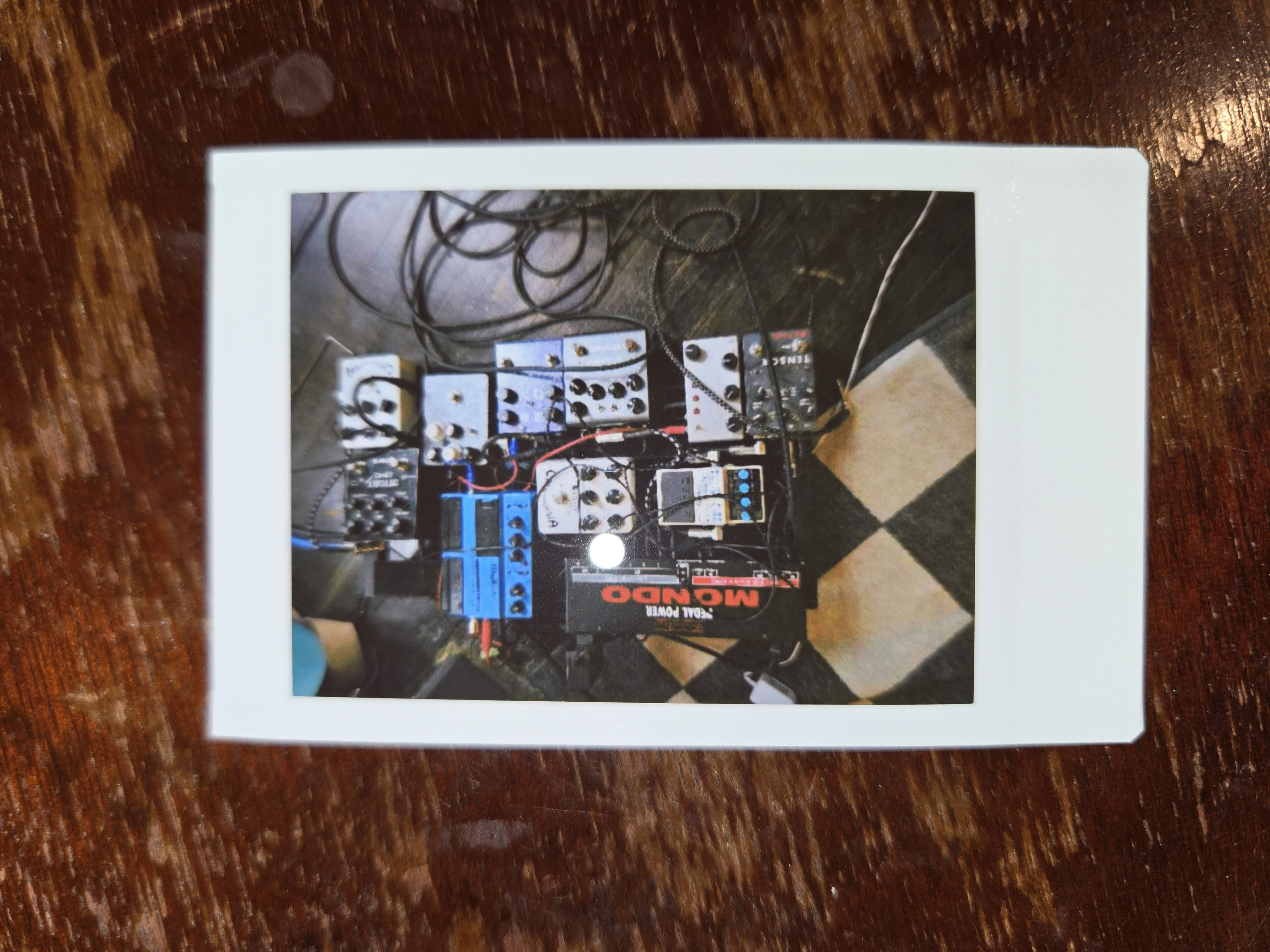
RJ: I remember we talked about it in Alaska whenever I was up there with him. I was like, “Next time we're both in the same place for the same amount of time, no new songs, no tape”—as much as we love tape—“we need to set everything up as professional as we can with our limited budget and knowledge, and let's get these tracks sounding exactly how they sound in our head.” December 20, 2025, I drove up to Arkansas, set up all that equipment that night. At this point I'm running not only my guitar amp but also a bass amp.
TM: Do you still have the same Ludwig drum kit from the beginning?
RJ: There were still traces of that set in the current setup but I don't think…like, there might have been one or two elements from it, yeah.
TM: I was just curious if the drums had graduated at all in the process.
RJ: The drums have always been our rotating door—I mean, pieces come, pieces go. I'm sure there's still some of the original kit laying around—I don't know where. We were borrowing a crash and a ride from our friend, Cole who drums for Ratt Maker, because he has really nice cymbals and we don’t.
[Both laugh]
RJ: I'm no drum tech so I don't know much about it but we got everything set up in the room, did a basic soundcheck. It was getting late, so I was like, “Let’s get some food, watch a movie, and just kick it, and not even think about the band for a while.” Woke up the next day, had coffee, and went to the store for beer.
TM: Got to stock up.
RJ: We got a lot of beer. Unholy amount. That and eggs. Nothing else.
TM: A terrible combination.
RJ: No, man, listen, dude, if you're gonna get in the bath, you gotta stink a little.
TM: Oh my.
[More laughter]
RJ: But anyway, so, stocked up and got started. I think the first track we recorded was Cupid and Psyche, just because we knew it’d cover a lot of the dynamic ground, and also that's a song that we have been talking about needing to record now for like six years and had never gotten a decent recording of it, so this was the time to do it.
TM: And you do the screams on that track?
RJ: I do, yeah. Any of the screams on the record, I do.
TM: I think the first screams are on that track. I was curious how you go about capturing those.
RJ: Where you're sitting on my couch right now is where it was captured.
TM: You were sitting when you did it?
RJ: I was hunched over like this. For the listeners or readers, I'm in the shrimp pose right now on my couch, and I cheated on the screams, except for on Laminar. Laminar is a real scream, which that was recorded over just the drum mics in a live context.
TM: Yeah yeah yeah—that, I can tell. But on Cupid, they sound like whisper screams.
RJ: They are.
TM: Nothing against that.
RJ: [Whisper screams: Ahhhhhhh(!)] You know, there were people living in the other half of this duplex. I told them I'd be doing vocals that day, but it was getting late. I was like, “I can't start shrieking.” No neighbor wants to hear "God sent an angel with a bow to hurt others how you've been hurt” at 2:00AM.
TM: You’re right. Are all the lyrics on s/t yours? Any of Zach’s lyrics make it on the LP?
RJ: The majority of what I wrote—I did do all the lyric writing—but I mean, Zach was there for any of the things I'm referencing, whether they're symbolic or not. Anything that we're putting into music is stuff that we either experienced at the same time together or that he had heard me talk about ad infinitum—for so long—that you know, we're just like, “Let’s put it in our music now.” I’m trying to think of a way to put…Zach interceded. He definitely had a huge influence on writing the album, even if it wasn’t by actively saying “Hey, how about these words.”
TM: Did the words come before the music after the music—or a mix?
RJ: It's a solid mix. Some of the lyrics, like, God, dude. I feel like I’m insufferable sometimes. When I was 20 and 21, it was horrible. I was very pretentious.
TM: What—with your lyrics?
RJ: Yeah. There were times recording vocals for this where I was like cringing at myself. Like, “How did I take myself seriously saying this stuff?” I wrote a lot of this when was 20 years old. I haven't figured much out since then, but I have a better grasp on how on-the-nose I want to be about describing something, or like, you know, immature thoughts. I'm thinking specifically because I remember I showed Zach these lyrics once. The summer that we got the drum kit and started the band, we had gone on this walk from his house over by Stanley's barbecue to this bridge on Highland. It was the end of the dog days of summer, we were both super sweaty and smelled bad, and it was late. We sat underneath the bridge and we're talking, and I was like, [with mawkish vocal inflection] “This summer I felt nothing close to love.”
TM: Awww.
RJ: And Zach started laughing and was like, “Get the fuck out! What am I, chopped liver? You need to get out of your head.” And he wasn’t like, [with machismo vocal inflection] “you need to stop bein’ a mope!” But effectively being like, you know, “The melodrama is good for the music or for a bit, but you need to not be so downtrodden about all this—you’re fucking 20, it's gonna be fine.”
TM: It’s funny hearing you tell that story. Maybe Zach has influenced you in the direction of like—“but smile”—you know? Because, I personally see you smile a lot. You come off very happy. I don't know if you know that, or are intentional about that, but you appear very happy. And these songs are very not happy.
RJ: Yeah
[Both laugh again]
TM: Which I love! I love to feel that.
RJ: I can promise the lyrics aren't just a bit. Nobody I think tries to make depressing music to sell records.
TM: Because it doesn’t.
RJ: Right. It really is at its core the healthiest form of self-expression. I think, you know, within reason, compartmentalizing a lot of that negativity. Being like, “I need to get this out so it doesn't consume me” or whatever. Getting it out in some format, even if it's a little tongue-in-cheek by making depressing music, it helps. I’m definitely a lot better off than I was six years ago, and I think that's why some of this can feel cringy and melodramatic now is just because I can't recognize myself almost flaunting being miserable. There are definitely times where I think I did—like I said about being pretentious earlier. Some of that self-growth has been by being able to give those feelings less weight and, you know, if I want to have some sort of self-identity—not make misery the origin point of that identity. I've got the lyrics on the demo here. [Picks up the lathe, flips to the back jacket.] That whole story I just told you is the lyrics to Laminar.
TM: Right, “under the bridge…”
RJ: [Reading the lyrics from the jacket]
It’s the summer bittersweetness
We've all come to know
Where the bitter won’t subside
And the sweet gets stale
Sit under the bridge
With your best friend
And the dilating crescendo
“Dilating crescendo” is a reference to a song by Poorly Drawn House. Great band out of South Carolina.
One other sweet thing was—you know Zach and I had that talk, I was being all grumpy, and pouting my bottom lip. And he was like, "Fuck off dude, I’m your best friend, we had so much fun this summer, and I'm not gonna let you remember this as a sour time. Too many important life decisions were made, and too much good is gonna come out of this for you to be feeling like it was wasted." Or something.
TM: It's like a blind spot. I appreciate that external perspective. It's totally possible that we're misremembering a thing or leaving out very important, meaningful details and need somebody to remind us of them.
RJ: Zach's always been great at not strictly being an “older brother” figure, but while also having more life experience than me. He’s a few steps ahead of me in a lot of ways, but he doesn't use that to condescend. He won't let me sit in misery for too long. He’ll let me feel what I need to feel, but he won't let me make it my whole life. On the walk back to his house from the bridge, he was like, “Let’s pick up some beer and just chill for a while”, as we often do.
TM: There's a theme here. Zach brings the humor and the alcohol, and we all feel better.
[Laughter]
RJ: On the walk back he was telling me about Alaska. He was like, “You really need to go to Alaska, man. You work for the summer, it's the most beautiful place, you meet all sorts of people. The work is crazy-hard, but it's so much fun, and you're only a mile away from trailheads. That feels like home to me. I'm sick of [Tyler, Texas], it's just a bit too small…" I don't know, he was very like angsty and felt claustrophobic. He was like, “You know, in Tyler you can always find a job, but it's never one that’s gonna make you happy, or it's never going to be enough to pay the bills.” He was like, “You need to experience what life in Alaska is like. It's what home is supposed to feel like.” And I told him, “I've never had an Alaska quite like you.” Which is one of the lyrics.
TM: Yeah, I was curious about that song, knowing Zach spends a lot of time in Alaska. I don't want to ask you to explain your lyrics in too much detail.
RJ: Most people don't have a choice, I just start talking and don't stop.
[Laughter]
A pitstop in Skagway
“I’ve never had an Alaska quite like you.”
TM: I was curious if Alaska's personified—if Alaska represents a person—or if Alaska represents Alaska.
RJ: So whenever I initially said it to him, I meant, “Oh I'll never have a place that feels that special or that magical—I'll never have a place that feels like home.”
TM: Zach has Alaska to think about or associate with, and you’re like, "I don't have an Alaska like you have.”
RJ: Yeah, we thought it was a funny double entendre where it could be like I don't have that physical, topographical location, but it could also be like, I'll never have another human being in my life who brings me such joy and eccentricity and comfort and that super, super deep level of friendship. A once in a lifetime thing. And I was like, “How fitting”, you know? It's apropos for our friendship to have this stupid double entendre.
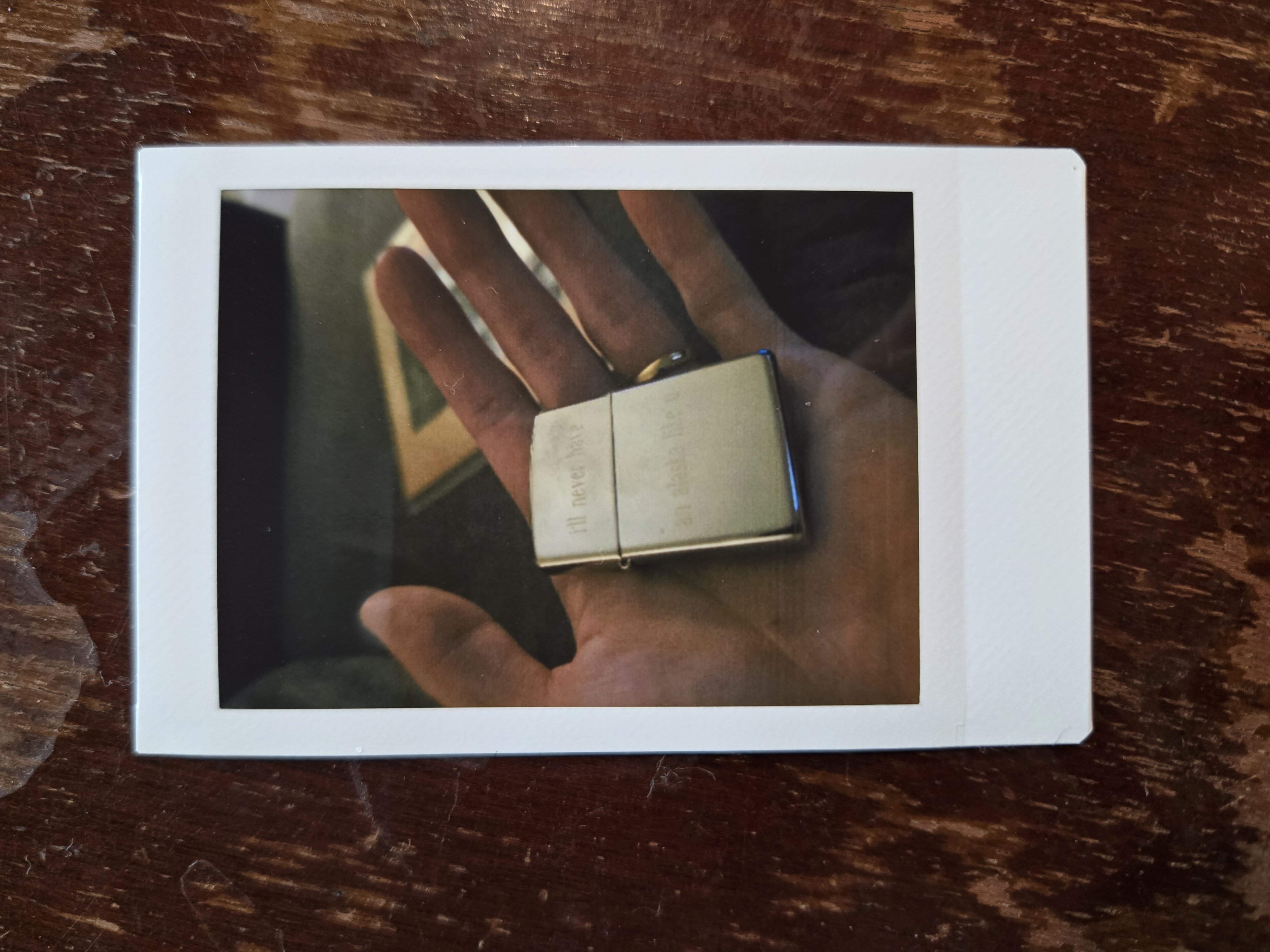
I don't want to talk about it too much just because it's not super pertinent to this album, but I did end up going to Alaska and working for a couple months. He was bartending, I was dish washing, at this big-time restaurant, super touristy spot where all the cruises would bring people in. I didn’t make it through the whole season. And whenever I left, Zach gave me a parting gift, a Zippo engraved with "I've never had an Alaska quite like you.”
Returning home
“They just don't know how to have fun without enough stimulation.”
TM: How do you think growing up in Tyler influenced the music you make?
RJ: I think living in a town this size…
TM: A hundred thousand people is what it is now.
RJ: Yeah about a hundred thousand. When I was an early teenager, if you met someone who knew what skramz was, or who Slint was, or who Tacoma Radar was—like I remember the first time I met someone who listened to like Slowdive. I was like, “Dude we gotta be friends”, right? Because we have this common interest. I remember growing up, a huge thing was if you shopped at Hastings and you were someone my age, it was kind of a clout thing. It was the one place we had to buy CDs and vinyl. We had a couple local shops that would be in business for a little, then close down. But for anything that was emo or alternative or whatever, you were hard pressed to find it. So, if you found someone that had an interest in that sort of music, you gravitated towards each other.
TM: So growing up in Tyler, there was scarcity. It’s hard to come by, so when you find it, there's a deeper appreciation.
RJ: Yeah it's like, we felt isolated for liking this music and stuff for so long, cause we don't know anyone else who feels the same way about it. So, when you meet someone who mutually appreciates it, there’s automatically a bond.
There was a skate park called Noble Park—it got shut down. For anyone who was any sort of edgy or alternative or whatever—that skate park and the wall by Starbucks and for a while Hastings—were the spots. Or you would just hang out at someone's house or apartment.
TM: Still do that.
RJ: Yeah, where are we now?
TM: Doing it.
RJ: That and The Foundry of all places was a staple spot to be throughout most of high school. Get wired off caffeine. Be doofuses. A lot of people claim that Tyler sucks because there's nothing to do and they just don't know how to have fun without enough stimulation. You could put Dave and Buster's and Top Golf in Tyler, I probably am not gonna go hang out there.
TM: Fair.
RJ: Shout out to the people that want that. But like, I felt, when you met someone who not only appreciated some kind of weird art but also had a desire to make it, and knew someone who knew how to? Dude! Senior year of high school, finding someone who would play drums was like—oh my God—the greatest feeling. They were so rare.
TM: They are rare. Guitar players? Dime a dozen. But there's only as many bands as there are drummers, you know what I mean?
RJ: The linchpin.
TM: So that's the setting. Then the influence on the music…
RJ: A lot of angst came as we got older. Obviously some of the angst is just typical. No matter where you live, you’re going to experience it. Like realizing, “Oh, I have to work for the rest of my life, and probably pay rent for the rest of my life. And I'm getting my heart broken for the umpteenth time” or whatever. So I mean, Tyler didn't necessarily influence that or give it a different shape. But I think living somewhere that feels—at the time, and still in some ways now (though I have a lot more hope now than I used to)—stunted politically.
TM: It’s weird how Tyler’s kind of “semi-urban”, but it's basically rural. It's so far from Dallas, the closest major metro—and Tyler has its own little “metro”—but it's really just like a big, rural town. That’s at least how it feels to me as someone who didn’t grow up here. I'm trying to figure it out in my thirties versus you grew up here, so you understand it in a way I can’t.
RJ: It's hard to hold everything at once. Tyler is progressing, Tyler's getting cooler, and Tyler has a lot of really cool people in it. And I think especially for the arts and community and stuff like that, it's in a really tight place where there's not competition between venues or between thrift stores or between coffee shops much because there's just enough to not oversaturate. So we all get to be cool with one another.
TM: There’s enough of the pie to go around.
RJ: But at the same time it's small enough that if someone does have beef, everyone's gonna know about it.
TM: And that can just take the wind out of the sails.
RJ: Yeah. But I think Tyler is doing pretty good right now. So Zach and I are content to play like one local show a year. Zach and I started making the music that we make not because we wanted to farm TikTok clicks or because we wanted to be a part of a scene that was getting popular. We started doing this because we both heard Shellac for the first time and were like, “Damn we should do that.” All our favorite memories were surrounded by this kind of music and to be able to make similar stuff together that re-embodies that joy is really awesome. And to hope that some other people will hear our music and feel that kind of way.
Wrapping up
“It's more fun to play music with people who don't know how to play their instruments.”
TM: Anything else you want to say about the LP or otherwise?
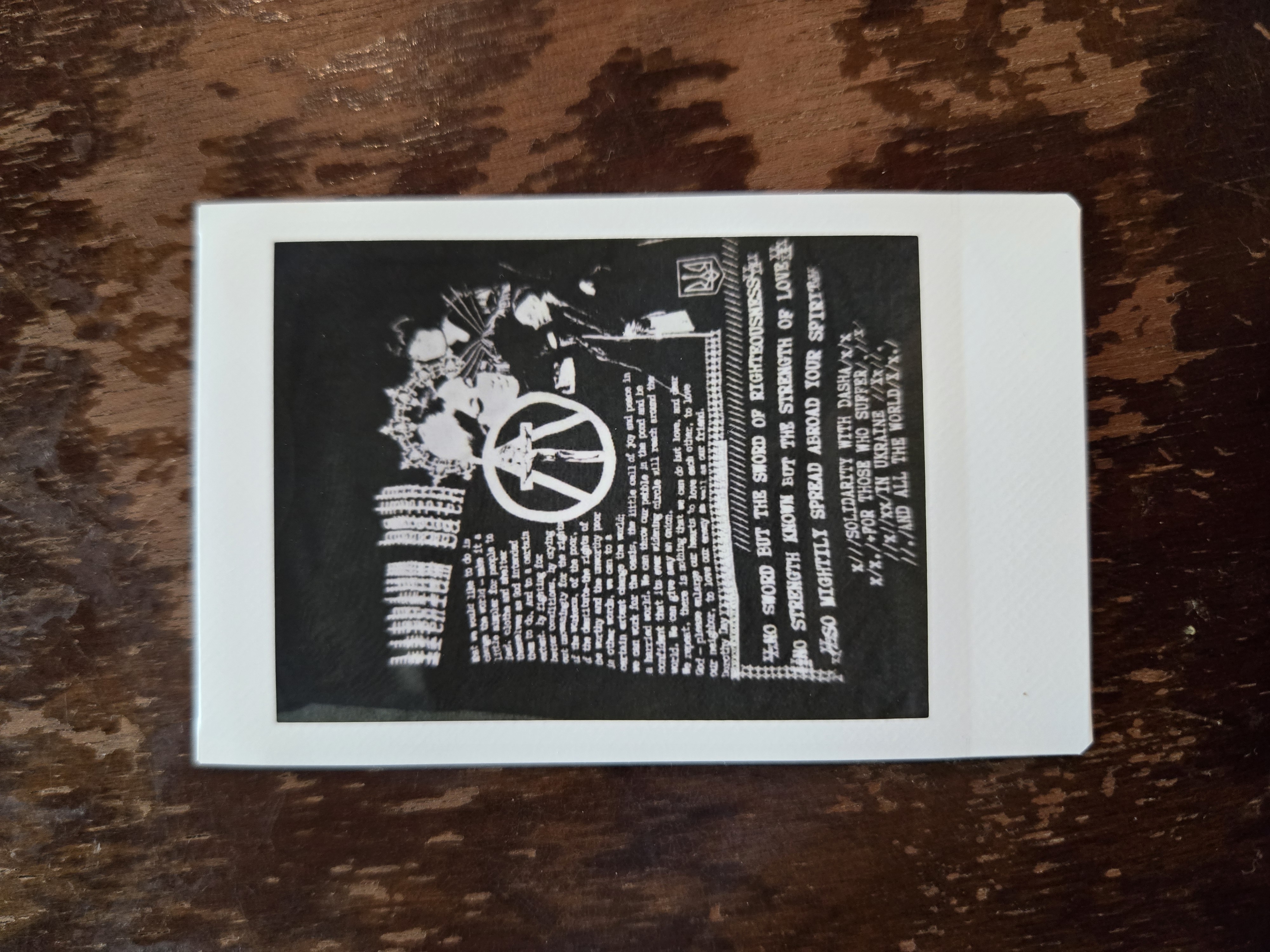
RJ: I got tapes for sale, if you want a cassette. And if you're like, “Man, I would but I don't have a tape player”, just go get a tape player. They're cheap and they are readily available on the internet. Don't be scared of them. And if you buy one you can make your friends mix tapes. And tape culture will never fund a genocide. And tape culture will never use AI and waste all your water.
Come to the show. Start a band with your friends because you want to do music with your friends and for no other reason. Have good politics. Have good etiquette. Care for the oppressed. Don't let your music scene just be only straight dudes. Let everyone be involved. If you know people that aren't musically inclined but have ever wanted to be, give them a chance. Start a band with them. It's more fun to play music with people who don't know how to play their instruments in my opinion. It's a lot more creative and it's fun.
TM: How much of the s/t are you planning to play on October 17 (2026)?
RJ: We’re looking to play like 8 songs off it and 2 off other releases.
TM: 8 songs, you’re doing the majority of it—that feels great.
RJ: For any of our local fans who’ve been coming to shows over the last six years, none of these are necessarily new to them. They were only ever live, but now the recordings exist, and it’s cool.
TM: Right. I’m looking forward to hearing the set. Thank you, Ransom.
RJ: Thank you, Tyler.